


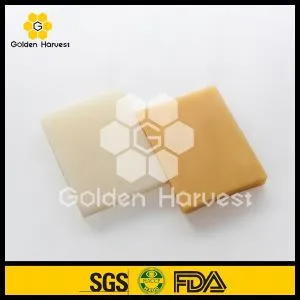
Beeswax is a natural wax that is secreted by worker bees. New beeswax is light yellow in color, but over time it darkens to a golden yellow. Beeswax has been widely used in various fields such as:medicine, cosmetics, food and candles etc. We currently provide yellow and white beeswax both in slab and pellets form. Yellow Beeswax is filtered for purity while the natural color and aromas of honey are preserved. White Beeswax is filtered for purity and the color has been naturally removed preserving the aroma.
Why Choose Us?
Reliable Product Quality
Equipped with advanced analysis instruments such as GC-MS, LC-MS/MS, HPLC, GC and UV etc,we have a strong QC team. All our analyst have been trained strictly and qualified with extensive work experience,which strongly guaranteed our quality control and assurance capacity. 100% pure and natural products, no additive.
Rich Experience
Focused on bee products for 20years. As a specialized manufacturer and exporter of bee products in China for 20 years. Our beekeeping operations are based out of our facilities in Surrey, BC which includes a workshop, equipment storage facilities, CFIA approved honey extraction facilities, and honey storage facilities.
Competitive Price
Our goal is to connect you with the highest quality natural products(Fresh Liquid Royal Jelly,Vitamin Propolis Capsule,etc.) at the best price. We believe in full transparency, carefully curating our selection and only working with brands that share our high standards.
Professional Service
Professional pre-sales team: Being patient to learn clients'need, Suggesting item in according to clients'need, Being Patient to answer clients'doubt.
Professional after-sale team: Keeping in touch with clients in order to let clients know process of the orders, Technical support throughout whole transaction, Designing suitable marketing plan, Timing visit after transaction completed, Being positive to answer occurring question during transaction.
Beeswax is a natural wax produced by honey bees. It is derived from the honeycomb of the hive and is harvested by beekeepers. Beeswax is used in many products such as candles, cosmetics, soaps, and moisturizers. It is known for its natural fragrance, water-resistant properties, and its ability to create a protective barrier on the skin.
-
![Refined White Beeswax Pellets]() Refined White Beeswax PelletsRefined White Beeswax Pellets Characteristics: White to Ivory colour of varying intensity with a fine-grain matt, non-crystalline fracture. Becomes soft and pliable when warmed by hand. Odour faint and characteristic of honey. Relative...view more
Refined White Beeswax PelletsRefined White Beeswax Pellets Characteristics: White to Ivory colour of varying intensity with a fine-grain matt, non-crystalline fracture. Becomes soft and pliable when warmed by hand. Odour faint and characteristic of honey. Relative...view more -
![Beeswax Yellow Beeswax]()
-
![Organic White Beeswax]() Organic White BeeswaxBeeswax(cera alba) is a natural wax produced by honey bees of the genus Apis.view more
Organic White BeeswaxBeeswax(cera alba) is a natural wax produced by honey bees of the genus Apis.view more -
![Pure Organic Beeswax White Honey]() Pure Organic Beeswax White HoneyBasic Info We can provide white beeswax slabs and white beeswax pellets according to your requirements. 1. BEESWAX DEFINITION: Beeswax is obtained from the honeycombs of bees after the honey has been removed by draining or...view more
Pure Organic Beeswax White HoneyBasic Info We can provide white beeswax slabs and white beeswax pellets according to your requirements. 1. BEESWAX DEFINITION: Beeswax is obtained from the honeycombs of bees after the honey has been removed by draining or...view more -
![Natural Beeswax Organic Pellets]() Natural Beeswax Organic PelletsNatural beeswax made from the hive of honey bees. Our Beeswax is 100% natural and pure, we can provice beeswax with slab or pellets form.A superior cosmetic quality Beeswax. Specifically formulated for cosmetic use and for candle making.view more
Natural Beeswax Organic PelletsNatural beeswax made from the hive of honey bees. Our Beeswax is 100% natural and pure, we can provice beeswax with slab or pellets form.A superior cosmetic quality Beeswax. Specifically formulated for cosmetic use and for candle making.view more -
![Organic Beeswax Pure Beewax]() Organic Beeswax Pure BeewaxOur natural, yellow beeswax are characterized by their golden yellow hue and naturally mild sweet aroma. They are filtered to be free of debris.Our yellow beeswax has a gentle scent of honey. Its easy-to-melt shape and natural yellow...view more
Organic Beeswax Pure BeewaxOur natural, yellow beeswax are characterized by their golden yellow hue and naturally mild sweet aroma. They are filtered to be free of debris.Our yellow beeswax has a gentle scent of honey. Its easy-to-melt shape and natural yellow...view more -
![Beewax Foundation Sheet For Beekeeping]() Beewax Foundation Sheet For BeekeepingAll of the beeswax that we use in comb foundation manufacture is first heated to approx 110 deg C before being micro filtered to remove all dross and moisture. This ensures that when you buy our comb foundation, you are only paying for...view more
Beewax Foundation Sheet For BeekeepingAll of the beeswax that we use in comb foundation manufacture is first heated to approx 110 deg C before being micro filtered to remove all dross and moisture. This ensures that when you buy our comb foundation, you are only paying for...view more -
![Cosmetic Grade Bee Wax Sheets]() Cosmetic Grade Bee Wax SheetsWe are providing high quality Beeswax Comb Sheet with pure beeswax. The Comb Foundation is in thin sheet of pure beeswax, with the cell bases on both sides in the same hexagonal shape as produced naturally by honeybees.view more
Cosmetic Grade Bee Wax SheetsWe are providing high quality Beeswax Comb Sheet with pure beeswax. The Comb Foundation is in thin sheet of pure beeswax, with the cell bases on both sides in the same hexagonal shape as produced naturally by honeybees.view more -
![Food Grade Beeswax Pellets]() Food Grade Beeswax PelletsBeeswax is the oldest and purest wax in the world. At honey harvest time the honeycombs are carefully opened to allow for honey to drain from the comb. The bees seal the honey into the combs with wax capping placed over every cell...view more
Food Grade Beeswax PelletsBeeswax is the oldest and purest wax in the world. At honey harvest time the honeycombs are carefully opened to allow for honey to drain from the comb. The bees seal the honey into the combs with wax capping placed over every cell...view more -
![Natural Pure Beeswax]() Natural Pure BeeswaxChina Beeswax Foundation Sheet, Beeswax Comb Foundation with Natural Beewax Our beeswax honeycomb sheets are available in various color,size and quantities. Our beeswax sheets that are made of natural 100% pure beeswax.view more
Natural Pure BeeswaxChina Beeswax Foundation Sheet, Beeswax Comb Foundation with Natural Beewax Our beeswax honeycomb sheets are available in various color,size and quantities. Our beeswax sheets that are made of natural 100% pure beeswax.view more -
![Natural Beeswax Slab]() Natural Beeswax SlabNatural refined yellow and white beeswax is filtered for purity while the natural color and aromas of honey are preserved.view more
Natural Beeswax SlabNatural refined yellow and white beeswax is filtered for purity while the natural color and aromas of honey are preserved.view more -
![Pure Yellow Beeswax]() Pure Yellow BeeswaxOur natural, yellow beeswax are characterized by their golden yellow hue and naturally mild sweet aroma. They are filtered to be free of debris.Our yellow beeswax has a gentle scent of honey. Its easy-to-melt shape and natural yellow...view more
Pure Yellow BeeswaxOur natural, yellow beeswax are characterized by their golden yellow hue and naturally mild sweet aroma. They are filtered to be free of debris.Our yellow beeswax has a gentle scent of honey. Its easy-to-melt shape and natural yellow...view more


Advantages of Beeswax
Beeswax is a great choice for many skin conditions. A honey, beeswax and olive oil mixture (you can easily make at home) is useful in the treatment of diaper dermatitis, psoriasis and eczema.
Natural beeswax is an amazing way to moisturize the skin and is commonly found in skin care products and cosmetics. It can help protect and repair rough, dry or chapped skin because it has the ability to lock in moisture. In addition to being a natural moisturizer that treats dry skin, you can use it at home daily to help prevent dry skin in the first place. Just combine beeswax with almond oil or jojoba oil, a few drops of vitamin E oil, and aloe to prepare a homemade remedy for dry skin.
In 2013, the Korean Journal of Internal Medicine published a study that investigated the alcohols found in honeycomb and if their antioxidant effects helped protect the liver. Researchers conducted the study using a mixture of beeswax alcohol to evaluate the safety and effectiveness in people with fatty liver disease. The study took place over a period of 24 weeks, finding that it helped normalize liver function and improve symptoms of fatty liver.
Research reveals that very long-chain fatty alcohols obtained from plant waxes have been reported to lower cholesterol in humans. In the findings, the nutritional or regulatory effects produced by wax esters or aliphatic acids and alcohols found in unrefined cereal grains, beeswax and many plant-derived foods helped lower LDL cholesterol by 21 percent to 29 percent and raise HDL cholesterol by 8 percent to 15 percent.
As medicine, beeswax has been studied in the use of relieving pain and inflammation and has been found to have mild anti-swelling effects. All randomized patients completed the study, and 23 experienced a reduction in pain, joint stiffness and physical function. These reductions were significant beginning in the second week and became enhanced during the trial.
Beeswax is one of the most well-known home remedies for acne. Research indicates that it has strong antiseptic, healing and anti-inflammatory properties, making it effective in the treatment of acne, in particular because it contains vitamin A. It's also an excellent skin softener and emollient that helps maintain a smooth skin texture after acne elimination. The combination of skin care applications, a healthy diet and daily exercise is the best way to control and prevent acne.
Treats Dry, Cracked Lips
The natural moisturizers in beeswax make it the perfect lip balm. If you suffer from cracked or chapped lips, topical applications of natural beeswax and a few other ingredients you likely already have at home can provide some much-needed relief.
Reduces Stretch Marks
Stretch marks can be embarrassing and prevent you from wearing some of your favorite summer fashions, so if you're wondering how to get rid of stretch marks, you may want to try beeswax. Due to its ability to protect the skin and retain water, it can have positive effects on those unsightly marks.
Helps Treat Jock Itch and Fungal Skin Infections
Jock itch and fungal skin infections are definitely annoying, but they can be treated using beeswax. Because it's anti-inflammatory, it can help reduce the pain associated with jock itch and fungal skin infections, while providing moisturizing benefits to help reduce the itching. Applying a mixture of beeswax, honey and olive oil to the affected area three times daily for four weeks may help improve jock itch and fungal skin infections.
Relieves Stress and Promotes Relaxation
It's common to think of beeswax candles when you think of beeswax. This is a good thing since candles made from paraffin can endanger your health and that of your family due to the soot from paraffin wax that can be inhaled. Also, it can cause significant damage to the inside of your house, such as your computers, electrical appliances and ductwork.
Types of Beeswax
Refined White Beeswax Pellets
Refined White Beeswax Pellets Characteristics: White to Ivory colour of varying intensity with a fine-grain matt, non-crystalline fracture. Becomes soft and pliable when warmed by hand. Odour faint and characteristic of honey. Relative density is about 0.96. Practically insoluble in water, completely soluble in volatile and fixed oils.
Beeswax Yellow Beeswax
Beeswax has many wonderful natural characteristics that make it one of the most popular waxes used both in candles and body care products. This particular type of beeswax is 100% pure with a naturally sweet aroma and a golden honey color. Since it is a completely natural product, the color and aroma will vary from lot to lot depending on where the hives were placed that the beeswax came from.
Organic White Beeswax
Beeswax has long-standing applications in human food and flavoring. For example, it is used as a glazing agent or as a light/heat source. It is edible, in the sense of having similar negligible toxicity to plant eaxes, and is approved for food use in most countries.
Pure Organic Beeswax White Honey
Beeswax is obtained from the honeycombs of bees after the honey has been removed by draining or centrifuging. The combs are melted with hot water, steam or solar heat; The melted product is filtered and cast into cakes of yellow beeswax.
Unstick a drawer
A thin coat of beeswax on wooden rails makes the wood drawers on Granny's old bureau slide smoothly. It does windows, too. Use wax to lubricate sashes.
Free frozen nuts
Help loosen a rusted nut by lubricating the bolt's threads with melted wax.
Beeswax for wood
For structural elements that need to look good but take no wear (such as exposed ceiling beams), heat equal parts beeswax, linseed oil, and turpentine. Apply with a burlap rag while the mixture is still warm.
Preserve bronze
To ward against oxidation caused by moist air, brush on a solution of ⅓ pound beeswax melted in 1 quart turpentine. Buff it with a towel to create a thin, hard coat.
Whip frayed rope
Wrap a waxed length of string tightly around the rope's tip about a dozen times. Tie off the loose end and trim the excess.
Lube screws
Rubs wax over the threads of screws to make them drive smoothly and resist corrosion.
Condition a wood cutting board
Add a half-teaspoon beeswax to a cup of mineral oil, microwave until the wax melts, and apply the mixture to the board with a soft cloth.
Beeswax polish on concrete counters
Give a sealed, dark concrete countertop a muted, natural luster by rubbing melted beeswax over the surface with a chamois cloth. Let it dry and then wipe.
Preserve a patina
Seal a copper sink by rubbing it with softened beeswax and polishing off the excess with a lint-free rag.
Waterproof leather
Combine equal parts beeswax, tallow, and neatsfoot oil (available online). Warm the mixture and use a rag to rub it on your work boots or gloves.

How is Beeswax Made?
Swarm bees, the bees that set out to start a new hive, gorge on the honey stored in their current hive in order to produce the beeswax needed to start their new colony. The bees then digest the honey and convert the carbs into liquid beeswax. Beeswax is produced from a gland in the abdomen of honeybees and is excreted to create the hive itself. The female worker bees have 8 glands in their abdomens to produce the wax when it is time to build the honeycomb. The wax that is secreted hardens as soon as it hits the air and forms a wax scale. (Fun fact! Each wax scale is like a tree, under a microscope you can see the different layers of wax much like you can see the rings on a tree!)
Man-made hives consist of organized boxes and frames that facilitate easy inspection of the hive for beekeepers. Bee colonies draw out comb from the foundation provided to create a network for egg laying and honey production. The worker bees will usually secrete beeswax until they are around 17 days old. The wax glands of older worker bees will atrophy after they begin daily foraging flights.
This seems like an extraordinarily complex process for a little bit of wax, but this also gives a new meaning to the old saying busy as a bee.
History of Beeswax Usage
Beeswax is a natural substance generated and secreted by honey bees that use it to develop their honeycombs. Beeswax is comprised largely of fatty acids, hydrocarbons, and esters. The wax is hard and breakable when cold but soft and pliable when heated or exposed to human body temperature. Because Beeswax does not spoil, become rancid, or otherwise expire, it can continue to be reheated and reused.
Like the varying colors of honey, the color of the wax depends on the age of the bees, the flowers from which they gather the nectar, the region of flower growth, and the purity of the honey. Beeswax ranges in color from almost white to black, although it is typically a shade along the yellow spectrum, appearing to be bright yellow, butterscotch yellow, or light amber. These colors are due to the pollen, resin, and gum content in the originating honey. These elements are also responsible for contributing to the agreeable scent of both the honey and the wax.
While Beeswax is commonly known for its light-bearing ability and for thus being a source of heat, historically, it has also been valuable for its versatile applications, which include culinary uses, such as food flavoring and food storage. For example, it continues to be used to coat or glaze cheeses in order to create an air-tight seal to prevent the growth of harmful bacteria. Used on some types of fruits, Beeswax prevents the loss of water while protecting them from gathering dust and from being scratched, bruised, or bitten by insects.

How to Identify Fake Beeswax?

Color and Scent
Freshly extracted beeswax is slightly white in color, which gradually changes into yellow because of the presence of pollen. Though the color of beeswax may depend on factors such as newness of comb, nectar source flower species, the extraction process, and storage method, the color of beeswax may vary from light yellow to dark brown. If you find the beeswax shiny and transparent, it is sure that beeswax may have foreign additives such as paraffin, ozokerite, or other toxic additives.

Feel
If you come across pure beeswax, you will find it hard when it's cold and soft yet pliable when it's warm. The surface of “fake” beeswax is smooth, shiny, sticky, and greasy because of the presence of paraffin. Pure beeswax would be free from excess waxiness and flakiness. It will leave a honey scent on your hand when you touch it.

Texture
Since beeswax contains natural oils, it has a different texture from other wax present in the market. To check the texture, break the beeswax and look the way it crumbles. If you find that it is breaking smoothly, it implies that it has been cut by additives.
Ask Your Supplier Directly
You can ask the beeswax supplier directly about the source of the raw beeswax. The supplier should be able to tell you about the cleaning and filtering process if the beeswax is claimed to be pure, cosmetic or organic. You should check their awareness about the standards of beekeeping practices. Also, ask if the beeswax is “cut” with additives like paraffin. You can try a sample of beeswax before making a final purchasing decision.
1. All natural:Coming from the honeycomb of the honeybee, beeswax is a completely all-natural substance straight from Mother Nature. Honeybees consume honey and pollen to produce the wax. It takes about eight pounds of honey to produce just one pound of beeswax.
2. Antibacterial:Like honey, beeswax has antibacterial properties helping keep things clean and reducing risks of contamination. This makes it a common ingredient in skin treatments, salves, and more.
3. Antifungal:Beeswax is also thought to have antifungal properties preventing the growth of yeasts and other fungi.
4. Edible:While it wouldn't provide you with many nutrients, beeswax is non-toxic and safe if ingested which is one of the reasons it makes an excellent lip balm.
5. Better even when burned:Unlike candles made from other wax, beeswax candles burn brighter and cleaner as they emit negative ions that are known to help purify the air. Beeswax also smells great when burned without any added chemicals or scents, as it's naturally aromatic from the honey and flower nectar that's found in the honeycomb.
6. Waterproof:Beeswax has been used throughout history as a sealant and waterproofing agent for items like belts, tents, and shoes. By rubbing beeswax onto a surface like leather or canvas and then heating it, the wax seeps into the materials' fibers and blocks water from passing through.
7. Moisturising:A common ingredient in lotions, salves, and balms, beeswax helps lock in moisture making it a great defense against dry skin, lips, or hair.
8. Eco-friendly:Since it comes directly from bees and is non-toxic, beeswax is completely environmentally friendly and an important ingredient in a range of eco-friendly products. Also, we use it to make our beeswax wraps and beeswax food bags.
9. Never goes bad:Beeswax contains a natural, powerful protective substance called propolis, which shields beeswax from ever going bad. Made by the bees by combining tree resin with wax flakes and pollen, propolis is used to used fix and strengthen the beehive while protecting the hive with an antiseptic barrier.
The Benefits of Beeswax in Cosmetics
Beeswax offers several advantages that make it a prized ingredient in cosmetics:
Moisturising and Hydrating
Beeswax is a natural humectant, attracting and retaining moisture, which helps to keep the skin hydrated and supple.
01
Protective Barrier
When applied to the skin, beeswax forms a protective barrier that shields it from environmental pollutants, harsh weather conditions, and moisture loss.
02
Emollient Properties
Beeswax softens and smooths the skin, making it an ideal ingredient for lip balms, creams, and body butters.
03
Anti-inflammatory
Beeswax contains anti-inflammatory compounds that can help soothe and calm irritated skin, making it suitable for sensitive or reactive skin types.
04
Natural Preservation
Beeswax has antimicrobial properties that can contribute to the preservation of cosmetic formulations, reducing the need for synthetic preservatives.
05
Beeswax Filtering Methods
Break beeswax into small blocks.
Place blocks in a large pan or wax melter, and cover with water.
Gently boil on low heat until wax melts completely.
Remove from heat, cover the pan with a blanket to cool slowly.
Separation of water and wax occurs, with impurities settling at the bottom.
Once cold (preferably overnight), remove the wax block from the pan.
Discard water containing debris, can be used as plant fertilizer.
Scrape off impurities from the bottom of the wax block using a stainless steel scraper.
Repeat the process until the wax is clean and pure.
To maintain the quality and longevity of beeswax, it is crucial to store it in ideal conditions. Proper storage conditions help to prevent degradation, maintain the properties of the beeswax, and ensure its usability over time. Here are some factors to consider when storing beeswax:
Emperature
Beeswax is sensitive to temperature fluctuations. It is best to store it in a cool and dry environment with a temperature range between 60°F to 75°F (15°C to 24°C). Avoid exposing beeswax to extreme heat or cold, as it can lead to melting or brittleness. The stability of temperature helps to preserve the texture and consistency of the beeswax.
Humidity
Beeswax is also sensitive to humidity levels. The ideal humidity range for storing beeswax is between 40% to 60%. Too much moisture in the air can cause the beeswax to absorb moisture, leading to softening or mold growth. On the other hand, extremely dry conditions can result in the beeswax becoming brittle. A moderate level of humidity helps to maintain the proper moisture balance in the beeswax.
Light Exposure
Beeswax is photosensitive and can fade or change color when exposed to direct sunlight or strong UV light. It is essential to store it in a dark or dimly lit area to protect it from light exposure. If possible, choose opaque containers that block out light entirely. If transparency is desired, consider using containers made of UV-resistant material or storing the beeswax in a dark cupboard or drawer.
Odor Control
Beeswax can absorb odors from its surroundings, which can affect its natural fragrance. To prevent the beeswax from picking up unwanted odors, store it away from strong-smelling substances such as chemicals, cleaning agents, or perfumes. Keeping the storage area clean and free from strong odors helps to preserve the original scent of the beeswax.
Air Circulation
While airtight containers are recommended, it is still important to allow some airflow to prevent the accumulation of moisture. Ensure that the storage area has adequate ventilation to avoid any buildup of stagnant air. This helps to maintain a balanced environment and prevent the growth of mold or mildew.
Regular Inspection and Maintenance for Beeswax
Regular inspection and maintenance are vital to ensure the quality and longevity of stored beeswax. By regularly checking on your stored wax, you can identify any issues or changes early on and take appropriate measures to preserve the beeswax. Here are some tips for conducting regular inspections and maintenance:
Visual Inspection
Periodically inspect your stored beeswax to check for any signs of damage, discoloration, or mold growth. Look for any unusual odors or changes in texture. If you spot any issues, investigate further to determine the cause and take necessary actions to rectify the problem.
Temperature and Humidity Check
Monitor the temperature and humidity levels in the storage area. Use a hygrometer and thermometer to ensure that the conditions remain within the recommended range for beeswax storage. Adjust the storage environment if necessary to maintain optimal temperature and humidity.
Container Integrity
Check the condition of the containers holding the beeswax. Look for any cracks, leaks, or damage that could expose the beeswax to air, moisture, or external contaminants. If you notice any problems, transfer the beeswax to a new container or repair any damages to ensure continued protection and preservation.
Rotate Stock
If you have multiple batches or types of beeswax, periodically rotate your stock. By using older batches first, you ensure that the beeswax is used before its quality deteriorates over time. This helps to maintain freshness and prevents waste.
Cleaning and Reorganization
Regularly clean the storage area to remove dust, debris, or spilled wax. Wipe down the containers to keep them clean and free from any contaminants. Take the opportunity to reorganize the storage area, ensuring that the beeswax is arranged in a systematic and easily accessible manner.
Temperature Control
During extreme weather conditions, such as hot summers or cold winters, take extra precautions to maintain the ideal storage temperature for beeswax. Consider using insulating materials or transferring the wax to a more temperature-controlled area if necessary.
Certifications
We are certified with ISO,HACCP, GMP,EU ECO and Japan JAS etc.
GMP health food standard system certification.
HACCP food safety management system.
EU ECO Organic food certification.
Japan JAS certified organic food.

Hangzhou Golden Harvest Health Industry Co., Ltd. is located in Hangzhou city, Zhejiang province,which is knows as”China bee products base", founded in 2004, Golden harvest is a professional bee products company, focusing on bee products, our main products are honey,beeswax, royal jelly,propolis,and bee pollen. Adhering to the "to provide pure natural products for your healthy life" as mission;top quality as basic requirements; "integrity, partnerships and win-win" as development ideas, with years of sales experience,quality products & perfect services,we have won a high reputation and are trusted by customers from both at home and abroad.

Ultimate FAQ Guide to Honey
GOLDEN HARVEST is one of the leading China beeswax suppliers and manufacturers, our professional factory is able to produce natural and organic beeswax with cheap price and high quality. Welcome to wholesale pure and raw bees wax, and to buy bulk products from us.
beeswax melts, natural beeswax pastilles, organic beeswax sheets


